


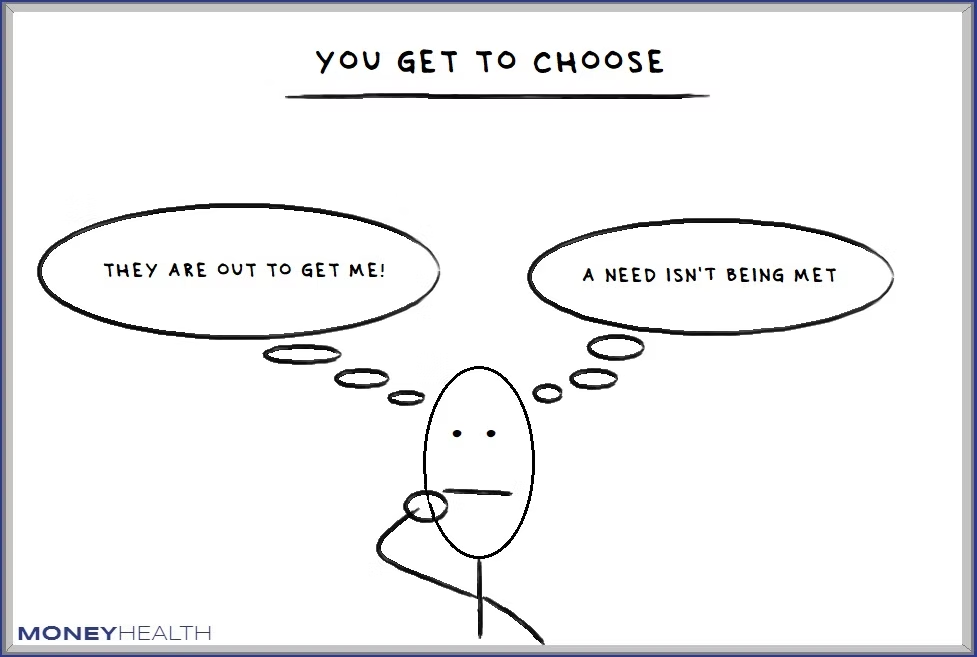
What I’ve increasingly noticed in cross-functional work is this: problems rarely begin with the issue itself. They begin with the story people are already carrying about the other side.
This team is always difficult. That person always blocks. These people never respond on time.
And once that story hardens, every new situation is no longer seen for what it is. It is seen through a cloud of old cynicism. Pantry talk, half information, second-hand impressions, accumulated irritation, all of it quietly shaping how you operate, often without you realising it. After that, even a normal disagreement feels political. A delay feels intentional. A question feels like an attack.
Then we react from that place. And our reaction often brings out the very behaviour we were suspicious of in the first place. Negativity always creates the evidence it wants.
I’ve found that the only way to break this is to assume positive intent early, almost deliberately. To say, maybe I am missing something here.
Maybe this reaction is coming from pressure, confusion, or something I do not fully see yet.
Something interesting happens when you do that.
The tone changes. You do not go in ready to counter. You go in trying to understand. And very often, the other person softens too. They sense the effort. Sometimes they even step back and rethink their own reaction.
Because when you react from a negative place, it just becomes two negatives colliding. And that rarely ends well.
So I keep coming back to this. Deal with what is in front of you. Not the story around it. Assume positive intent always.